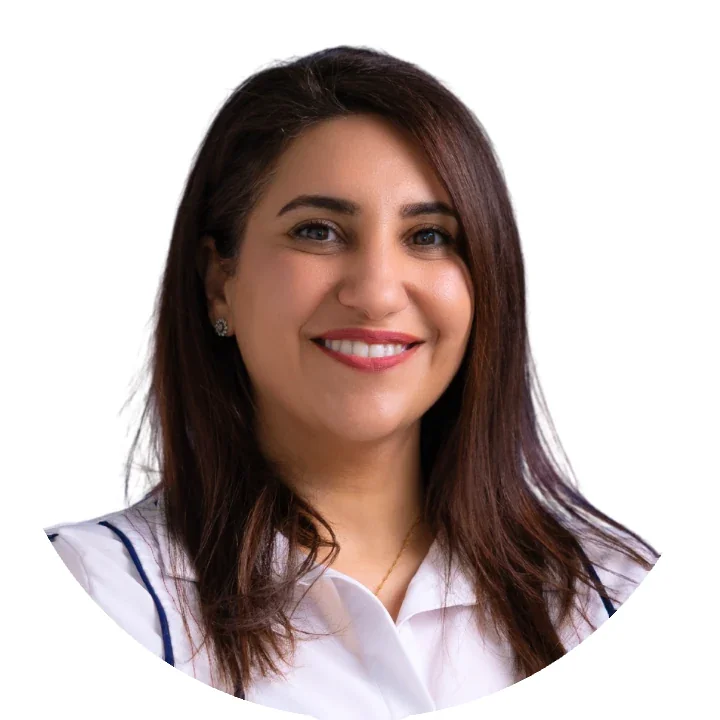
Dr. Haneen AlBoosta, Consultant General and Endocrine Surgeon in Bahrain

Dr. Haneen AlBoosta — Consultant General, Endocrine & Laparoscopic Surgeon

Thyroid Surgery: When Is It Needed and What Are the Options?

Dr. Haneen AlBoosta — Consultant General, Endocrine & Laparoscopic Surgeon in Bahrain

Thyroid surgery is recommended when a nodule is cancerous or suspicious on biopsy, when a goitre presses on the windpipe or oesophagus, when an overactive thyroid cannot be controlled medically, or when a nodule keeps growing. The two main operations are lobectomy, which removes one half of the gland, and total thyroidectomy, which removes all of it. The choice depends on the diagnosis, nodule size and gland involvement.

Indications for thyroid surgery

  • Confirmed thyroid cancer or a biopsy reported as suspicious for malignancy.
  • Indeterminate biopsy results where diagnostic surgery is the clearest next step.
  • Compressive symptoms: difficulty swallowing, breathlessness lying flat, or a choking sensation.
  • Large or cosmetically troubling goitre, including goitre extending behind the breastbone.
  • Hyperthyroidism not controlled by medication or radioiodine, or when those options are unsuitable.
  • Significant nodule growth during ultrasound follow-up.

When surgery is not needed

Most thyroid nodules never require an operation. A benign biopsy, stable size and no pressure symptoms usually mean ultrasound monitoring. Mildly abnormal thyroid hormone levels without a structural problem are treated medically, not surgically.

Lobectomy or total thyroidectomy?

  • Lobectomy (hemithyroidectomy): removes one lobe. Often enough for a benign nodule confined to one side, and for selected small, low-risk thyroid cancers.
  • Total thyroidectomy: removes the whole gland. Preferred for larger or higher-risk cancers, disease in both lobes, large multinodular goitre and some cases of Graves' disease.
  • The decision balances the chance of avoiding lifelong hormone tablets against the need for complete disease clearance and simpler follow-up.

Voice and the recurrent laryngeal nerve

The recurrent laryngeal nerves run immediately behind the thyroid and control the vocal cords, so protecting them is central to the operation. Temporary voice changes or tiring of the voice can occur and usually settle over weeks. Permanent voice change is uncommon in experienced hands.

Intraoperative nerve monitoring (IONM)

Intraoperative nerve monitoring uses a special tube and probe to confirm that the nerve is functioning during the operation. It supports careful anatomical dissection rather than replacing it, and is particularly valuable in large goitres, repeat surgery and cancer operations. It is used according to the case, not automatically in every operation.

Thyroid hormone after surgery

After total thyroidectomy, daily thyroid hormone replacement is required for life and the dose is adjusted with blood tests. After a lobectomy, the remaining lobe often maintains normal levels, and only some patients need tablets.

Frequently Asked Questions

Does every thyroid cancer require total thyroidectomy?

No. Small, low-risk papillary cancers confined to one lobe can often be treated with lobectomy. Larger tumours, disease in both lobes or involved lymph nodes usually need total thyroidectomy.

When is thyroid lobectomy enough?

When the problem is limited to one lobe — for example a benign but enlarging nodule, an indeterminate nodule needing diagnosis, or a selected small low-risk cancer with a normal opposite lobe.

Can thyroid surgery affect the voice?

Temporary hoarseness or a weaker voice can happen and usually improves within weeks. Permanent change is uncommon when the nerves are carefully identified and protected.

What is nerve monitoring during thyroid surgery?

It is a technique that checks the electrical function of the nerves supplying the vocal cords during the operation, helping to identify and protect them alongside careful dissection.

Is nerve monitoring used in every operation?

No. It is used selectively — for example in large goitres, repeat surgery or cancer operations — and the decision is discussed before surgery.

Will I need thyroid hormone after surgery?

Always after total thyroidectomy. After lobectomy many patients need nothing, and thyroid function is checked after surgery to confirm.

Request an Appointment

To help you faster, choose the topic closest to your enquiry. We will point you to the right page and the best way to get in touch.

Leave your details and we will get back to you

Please do not enter sensitive medical details in this form. Your details are used only to contact you about your request.

Request a Consultation

To discuss your symptoms, imaging or biopsy results with Dr. Haneen AlBoosta, book an appointment by WhatsApp or phone.

Medical Review

Reviewed by Dr. Haneen AlBoosta, Consultant General & Endocrine Surgeon. This page is updated periodically to remain consistent with current medical references and international guidelines. It is intended for general education and does not replace an individual medical consultation, examination or treatment plan.

© 2026 Dr. Haneen AlBoosta Clinic — All rights reserved